TLDR: ATVs are single-rider, straddle-seat machines perfect for tight trails and active riding. UTVs offer side-by-side seating, steering wheels, cargo beds, and better safety features—making them ideal for work, passengers, and comfort-focused adventures.
- ATVs use handlebars; UTVs have steering wheels and pedals
- UTVs haul significantly more cargo (up to 1,000+ pounds)
- ATVs are more maneuverable on narrow, technical trails
- UTVs provide roll cages, seat belts, and weather protection
- ATVs cost less upfront and have lower operating expenses
You’re standing in a dealership or scrolling through listings online, trying to figure out which off-road vehicle makes sense for your needs. The acronyms start flying—ATV, UTV, side-by-side—and suddenly what seemed like a simple decision gets complicated fast.
Here’s the truth: both ATVs and UTVs have their place, and the right choice depends entirely on how you plan to use it. Let’s break down what separates these machines so you can make a confident decision.
What Is an ATV?
An ATV (All-Terrain Vehicle) is exactly what it sounds like—a vehicle designed to handle virtually any terrain you throw at it. These are the classic four-wheelers you’ve probably seen tearing up trails or working on farms for decades.
ATVs are built around a simple concept: one rider, straddling a seat similar to a motorcycle, controlling the machine with handlebars. You’ll typically find them with engines ranging from 50cc for kids’ models up to 1000cc for serious adult machines. Most modern ATVs run on four wheels, though three-wheelers existed in the past before safety concerns phased them out.
The riding position on an ATV is active. You’re not just sitting there—you’re shifting your weight to navigate turns, leaning into climbs, and using your body to help the machine tackle challenging terrain. It’s an engaging, almost athletic way to ride that many enthusiasts absolutely love.
These machines excel at maneuverability. An ATV can squeeze through tight trails, make sharp turns in dense woods, and navigate rocky paths that larger vehicles can’t touch. They’re also relatively affordable compared to their bigger cousins, with entry-level models starting around a few thousand dollars.
What Is a UTV?
A UTV (Utility Task Vehicle) represents the next evolution in off-road transportation. What does UTV stand for? While the acronym means Utility Task Vehicle, you’ll also hear these machines called side-by-sides—and that name tells you a lot about how they’re designed.
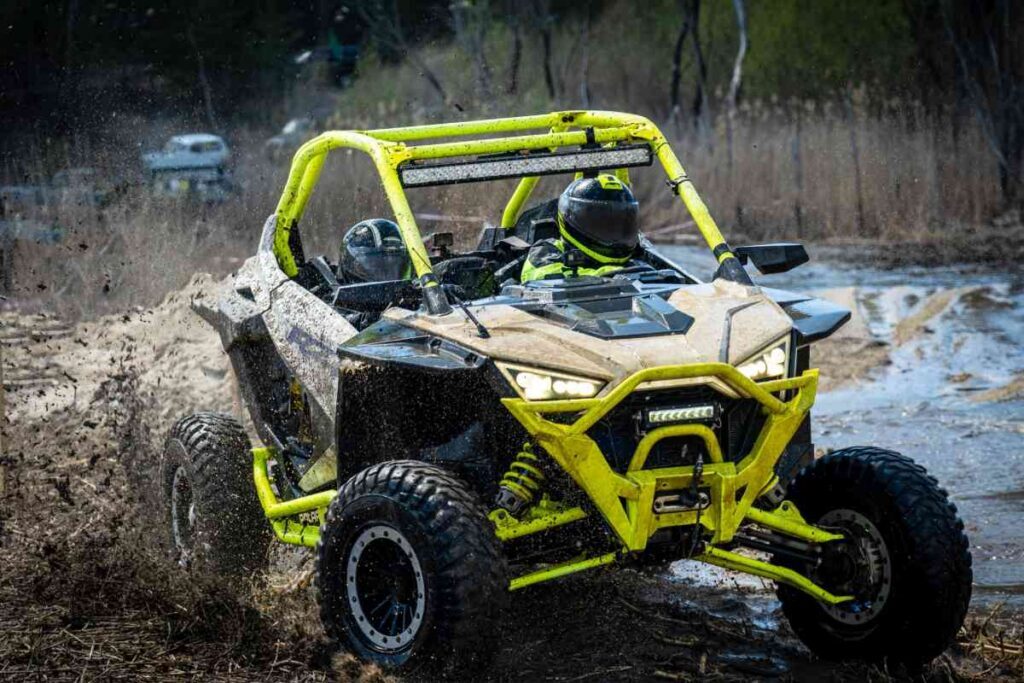
Unlike ATVs where you straddle the seat, UTVs feature side-by-side seating for two or more passengers. You sit in an actual seat with a steering wheel (not handlebars), and the vehicle typically includes a roll cage, seat belts, and a cargo bed. Think of it as a stripped-down, ultra-capable truck designed specifically for off-road adventures.
UTVs generally pack more powerful engines—anywhere from 500cc up to 1000cc or more. The added power makes sense when you consider these machines are hauling more weight, carrying passengers, and often pulling heavy loads or operating implements.
The cargo capacity is where UTVs really shine. Most models feature dump beds that can carry several hundred pounds of materials, tools, or gear. Some work-oriented UTVs can haul up to 1,000 pounds or more, making them legitimate workhorses for farms, ranches, and construction sites.
Modern UTVs come in various configurations. You’ll find two-seaters for couples or solo riders who want extra cargo space, four-seaters for families, and even six-seater models for larger groups. Sport models emphasize speed and handling, while utility-focused versions prioritize towing capacity and cargo room.
Key Differences Between ATVs and UTVs
The difference between ATV and UTV machines goes way beyond just how many people can ride. Let’s get into the specifics.
Seating and Safety
ATVs seat one rider (or sometimes two on specific models) in a straddle position. You’re exposed to the elements with minimal protection. UTVs offer side-by-side seating with actual automotive-style seats, seat belts, and roll cages for safety. Is a side-by-side an ATV or UTV? Side-by-side is just another name for a UTV—they’re the same thing.
Control Systems
Operating an ATV means using handlebars and shifting your body weight actively. UTVs use steering wheels and pedals just like a car, making them instantly familiar to anyone who’s ever driven. There’s definitely less of a learning curve with a UTV.
Cargo and Towing Capacity
ATVs can handle light cargo on front and rear racks—usually a couple hundred pounds total. UTVs dominate here with dump beds and towing capacities that can exceed 2,000 pounds on heavy-duty models. If you’re hauling materials, tools, or equipment regularly, the UTV wins hands down.

Trail Access and Maneuverability
ATVs are narrower and more nimble. They can navigate single-track trails and tight spaces that UTVs simply can’t fit through. If you’re riding technical terrain or exploring narrow trails, the ATV’s compact size becomes a major advantage.
Speed and Performance
Sport ATVs can absolutely fly on open terrain, with some models hitting 70+ mph. Sport UTVs match or exceed these speeds while offering better stability at high velocity thanks to their wider stance. For pure racing or high-speed desert running, both have their enthusiasts.
Price Point
ATVs generally cost less upfront. You can get into a solid used ATV for a few thousand dollars, while UTVs typically start in the higher price range and climb quickly with added features. Operating costs run higher for UTVs too—bigger engines mean more fuel consumption and pricier parts.
Comfort Level
Long rides on an ATV can be tiring since you’re actively working to control the machine. UTVs offer car-like comfort with actual seats, often with features like roofs, windshields, and even heating systems on premium models. Your passengers will definitely appreciate the UTV setup.
What They Have in Common
Despite their differences, ATV vs UTV isn’t always an either-or proposition. Both vehicles share some fundamental characteristics that make them popular for outdoor recreation and work.
They both handle rough terrain exceptionally well. Whether you’re crossing rocky creeks, climbing muddy hills, or navigating through sand, both machine types are built to go where regular vehicles can’t. Four-wheel drive systems (or all-wheel drive on some models) provide the traction you need for challenging conditions.
Maintenance requirements are similar too. You’ll need to stay on top of oil changes, air filter cleaning, tire pressure, and general upkeep for either machine. Both types benefit from proper storage and regular inspection of critical components.
Versatility is another shared trait. While UTVs lean more toward utility and ATVs toward recreation, both can handle a mix of work and play. Farmers use ATVs for checking fences and herding livestock, while weekend warriors take UTVs on trail rides and camping trips.
Frequently Asked Questions
Is an ATV or UTV better for off-road riding?
It depends on your riding style. ATVs excel on tight, technical trails where maneuverability matters most. UTVs dominate on wider trails, open terrain, and situations where you want to bring passengers along for the adventure.
Which is safer: an ATV or a UTV?
Statistics generally favor UTVs thanks to their roll cages, seat belts, and lower center of gravity. However, safe operation matters more than vehicle type—proper training, appropriate gear, and responsible riding habits make the biggest difference in safety.
What are the advantages of owning a UTV over an ATV?
UTVs offer superior cargo capacity, weather protection, passenger seating, and reduced physical fatigue on long rides. They’re also more practical for serious work applications like farming, ranching, or property maintenance.
Can you use an ATV for farm work like a UTV?
Absolutely, though with limitations. ATVs work great for checking livestock, moving between fields, and light hauling on racks. For heavy loads, towing implements, or transporting multiple workers, a UTV makes more sense.
Final Thoughts
The ATV or UTV decision ultimately comes down to your specific needs and riding style. If you’re navigating tight trails solo, want an affordable entry point, or prefer the active riding experience, an ATV might be your machine. If you’re hauling cargo, bringing passengers, working on a property, or prioritizing comfort, a UTV probably makes more sense.
Some folks end up owning both—and there’s definitely logic to that approach if your budget and storage space allow it. Each machine excels in its own domain, and having options means you’re prepared for whatever adventure or task comes your way.
Disclaimer: While we endeavor to keep the information on our blog up to date and correct, Maxtrade (Coolster) makes no representations or warranties of any kind, express or implied about the completeness, accuracy, reliability, suitability, or availability with respect to the website or the information, products, services, or related graphics contained on the website for any purpose. Any reliance you place on such material is therefore strictly at your own risk.